A Tibetan thangka with a red-bodied figure seated in meditation at its centre, adorned with ornaments and haloed by rays of light, beneath rows of lineage teachers and above a band of wrathful protectors.
A photograph of a glass jar holding the hair and nails of Shardza Tashi Gyaltsen (1859–1934), the Bön Dzogchen master, recovered after he is said to have attained the rainbow body in 1934, as shared by Raven Cypress Wood.
A photograph of the place in Tibet where the Bön master Shardza Tashi Gyaltsen is said to have attained the rainbow body: a small building with stupas on its roof, hung with prayer flags and cloth, on a forested mountain slope.
A 19th-century Tibetan thangka showing Padmasambhava, the teacher who brought Vajrayana Buddhism to Tibet, as a rainbow body: his seated form rendered as swirling bands of coloured light, surrounded by flowering trees, with Avalokiteshvara, Mahakala and Green Tara around him.
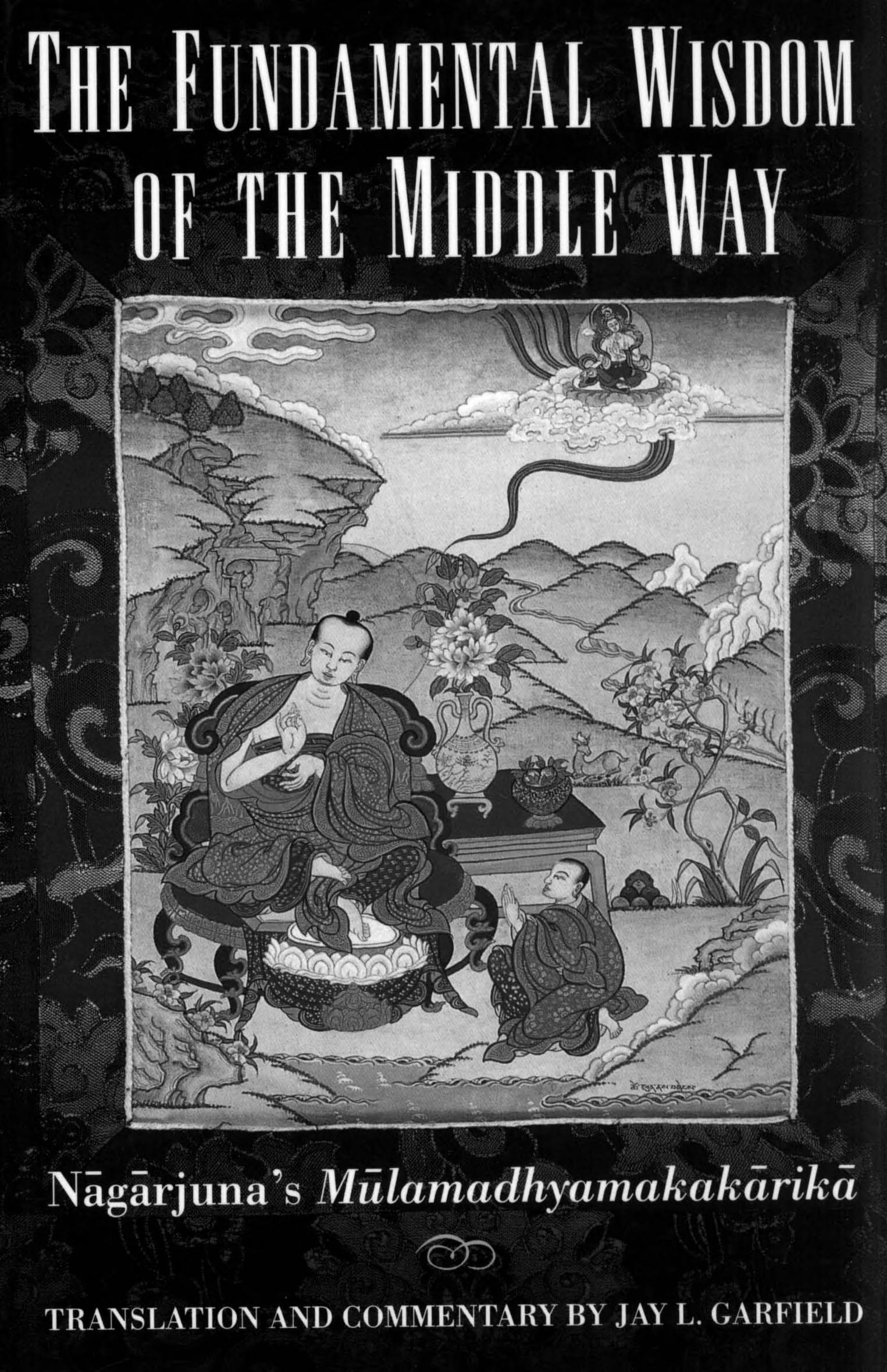
The Fundamental Wisdom of the Middle Way is Jay L. Garfield's translation of and commentary on the Mūlamadhyamakakārikā, the foundational Madhyamaka text by the second-century Indian Buddhist philosopher Nagarjuna, published by Oxford University Press in 1995.
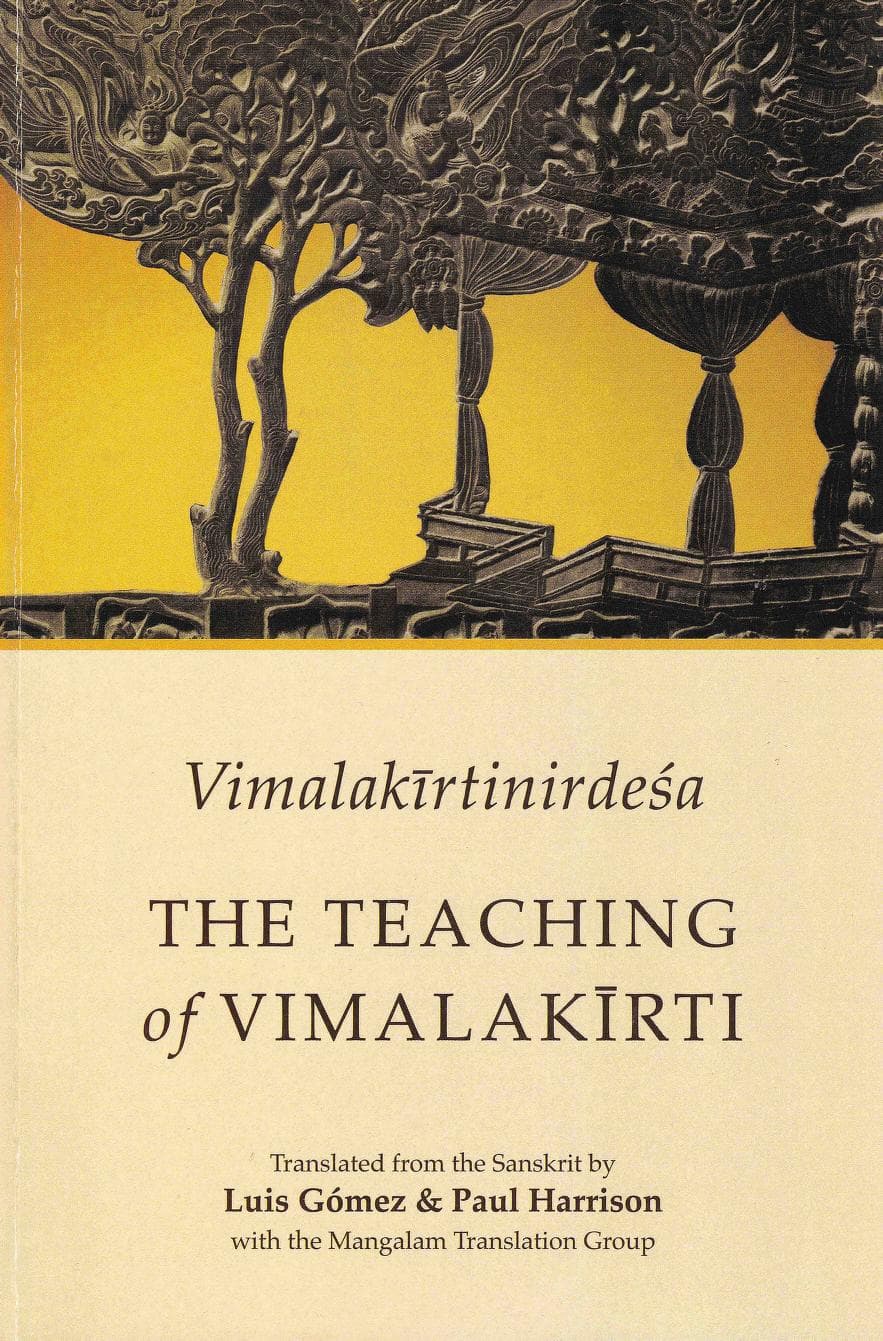
The Teaching of Vimalakīrti is an English translation by Luis Gómez and Paul Harrison of the Mahayana Buddhist Vimalakīrtinirdeśa, made from the Sanskrit manuscript found in the Potala Palace in Lhasa, published in 2022 and awarded the Khyentse Foundation prize for outstanding translation.
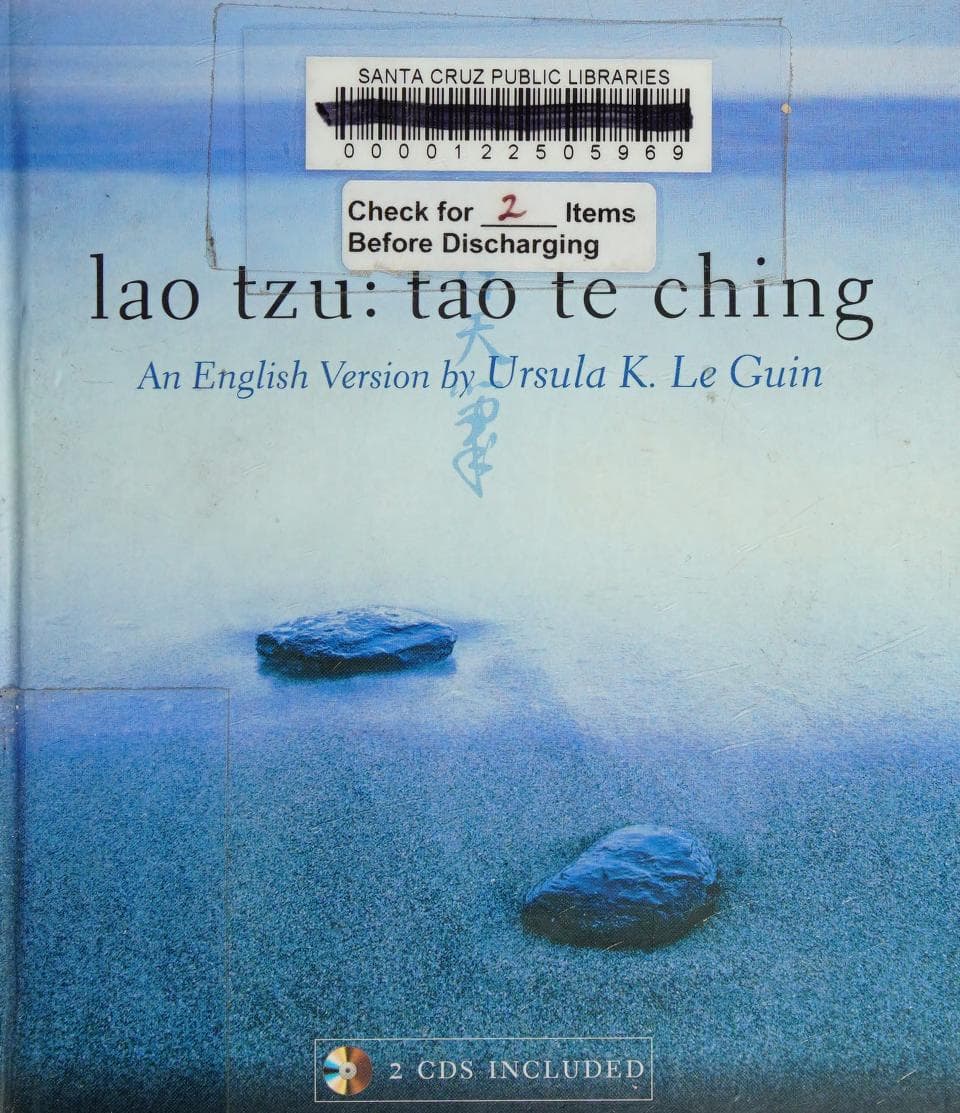
Tao Te Ching: A Book about the Way and the Power of the Way is Ursula K. Le Guin's English version of the classical Chinese text attributed to Laozi, first published in 1997 and shown here in the 2009 Shambhala edition, with her own commentary and notes.
Talks with Sri Ramana Maharshi is the record of conversations with the Indian sage Ramana Maharshi kept by Munagala S. Venkataramiah between 1935 and 1939, first published in 1955 and shown here in the 2006 one-volume edition from Sri Ramanasramam, Tiruvannamalai.
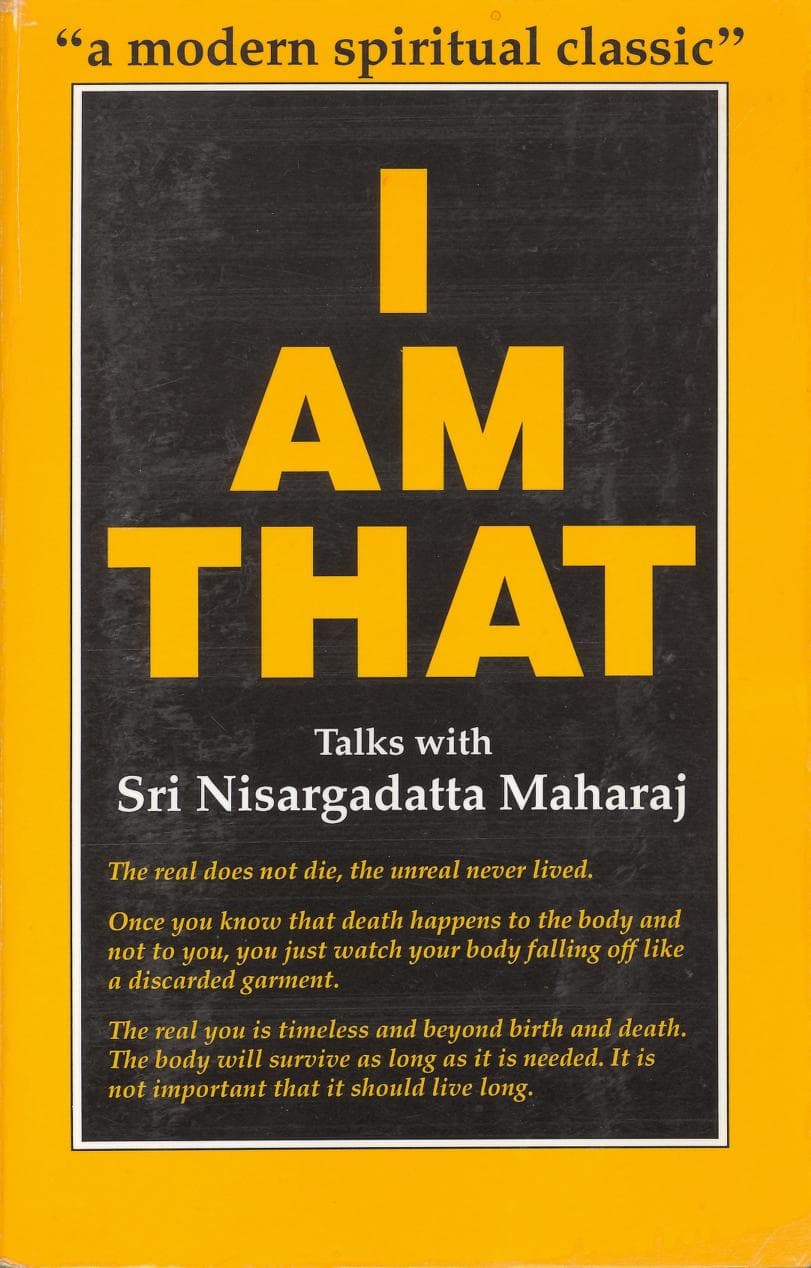
I Am That is a collection of talks with the Indian teacher Nisargadatta Maharaj, translated from Marathi tape recordings by Maurice Frydman and edited by Sudhakar S. Dikshit, first published in Bombay in 1973 and shown here in the Acorn Press edition.
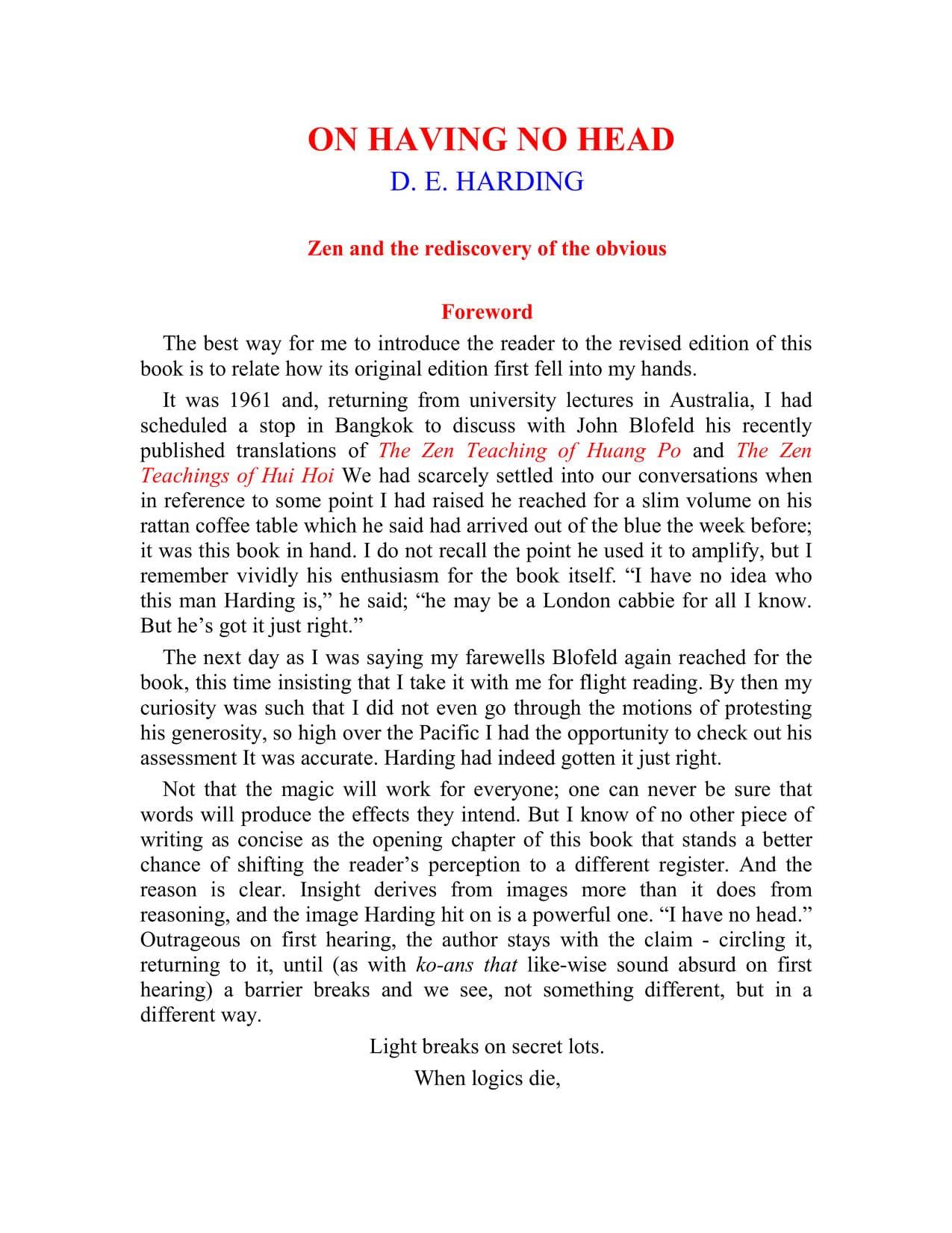
On Having No Head: Zen and the Rediscovery of the Obvious is a short book by the English philosopher Douglas E. Harding, first published in 1961 and shown here in its revised edition, describing the experience of finding, from one's own point of view, no head — only open space filled with the world.
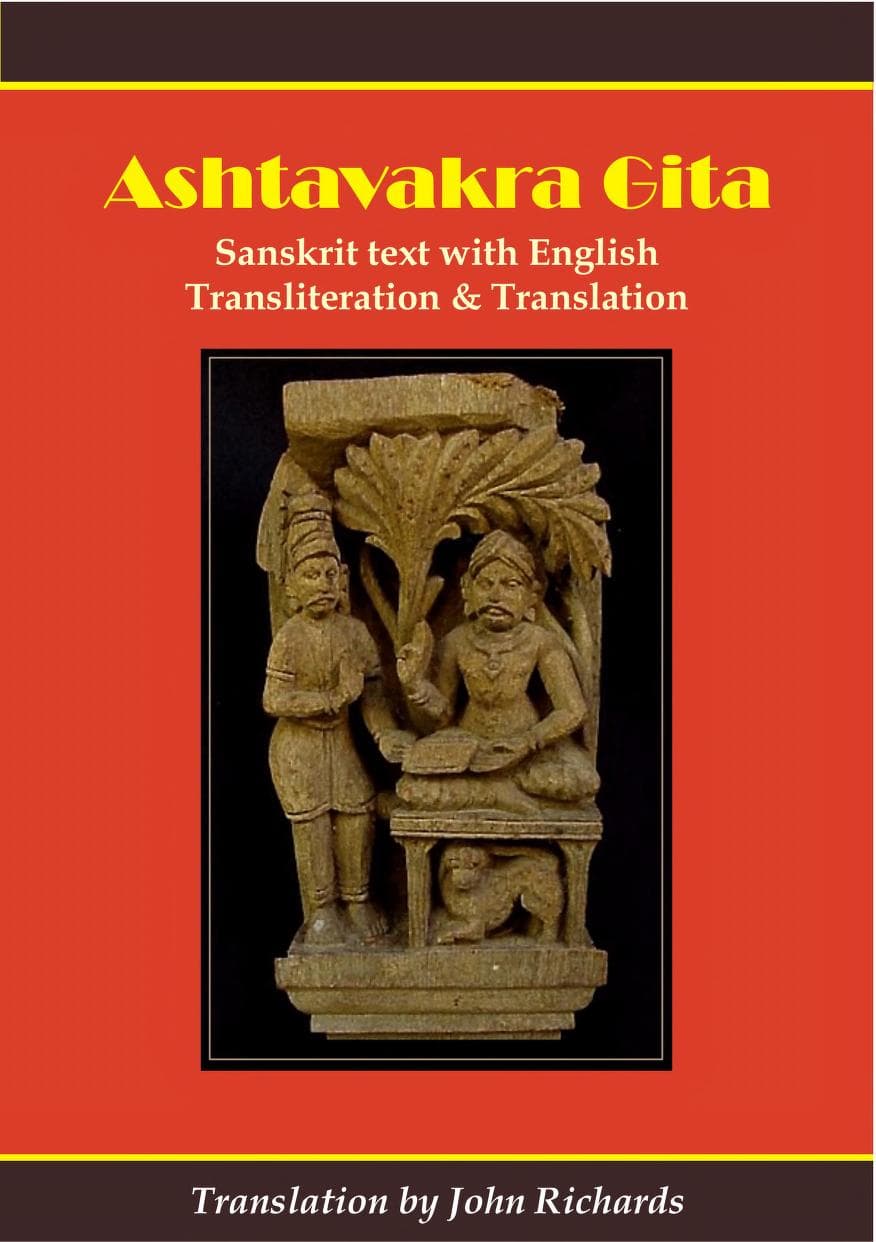
The Ashtavakra Gita is a classical Sanskrit text of Advaita Vedanta, a dialogue in which the sage Ashtavakra instructs King Janaka on liberation, given here in Sanskrit with English transliteration and a translation by John Richards.
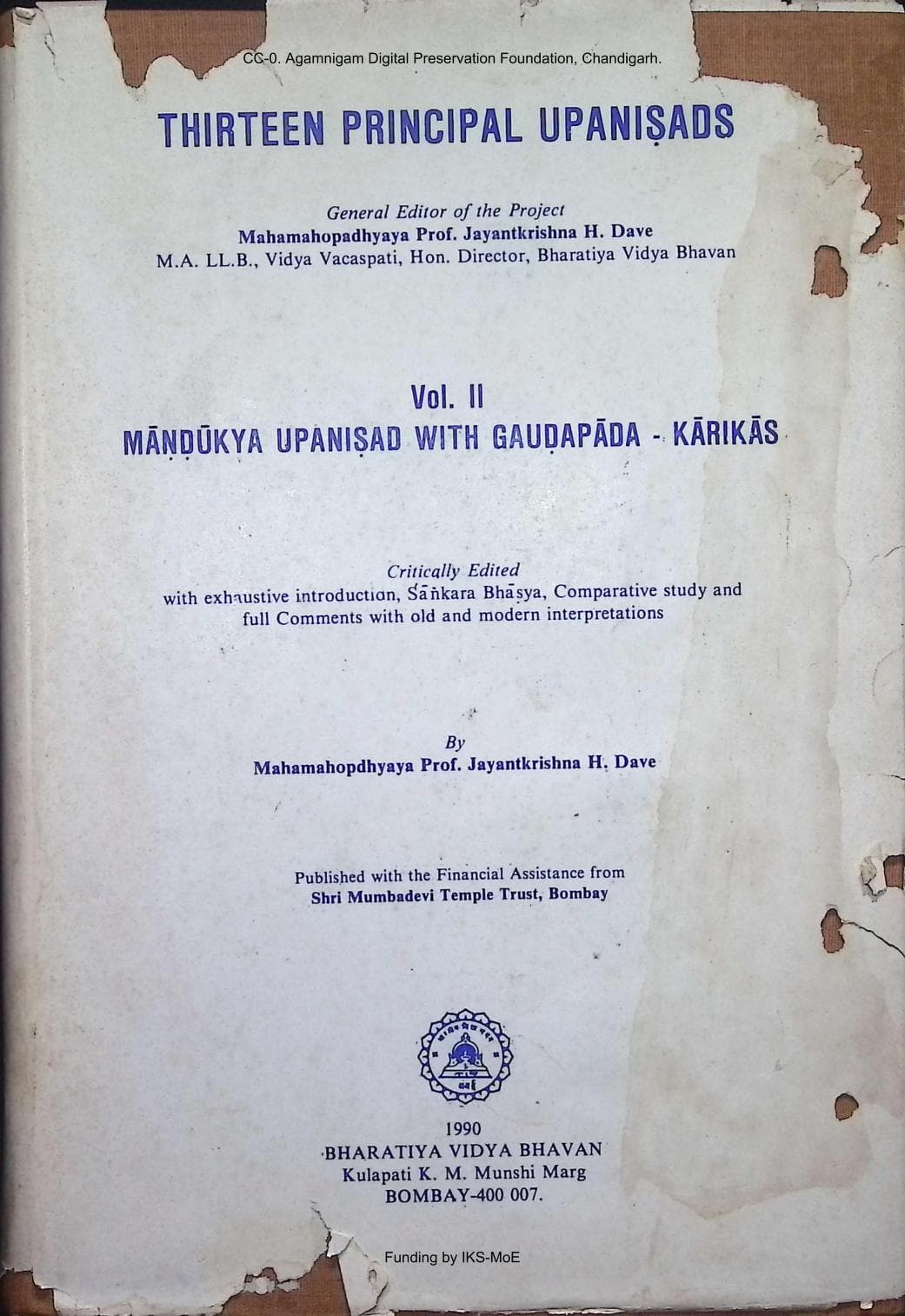
Volume II of the Thirteen Principal Upanisads series, a critical edition of the Mandukya Upanisad with Gaudapada's Karikas and Sankara's commentary, edited with introduction and notes by Jayantkrishna H. Dave and published by Bharatiya Vidya Bhavan in Bombay in 1990.
The Zen Teaching of Huang Po is John Blofeld's English translation of the teachings of the ninth-century Chinese Chan master Huang Po on the transmission of mind, published in London in 1958.
A worn, torn-edged painting of a crowned figure seated on a lotus, hands raised in a teaching gesture, identified as Garab Dorje, by tradition the first human teacher of Dzogchen.

Consciousness beyond life